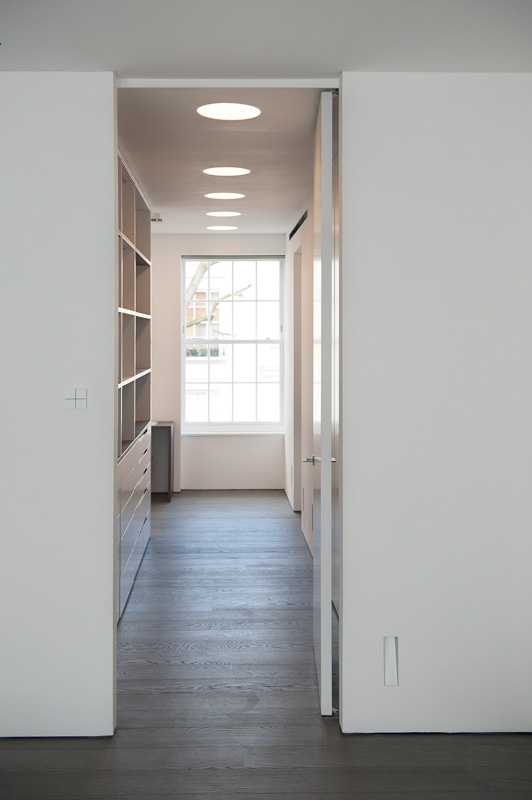
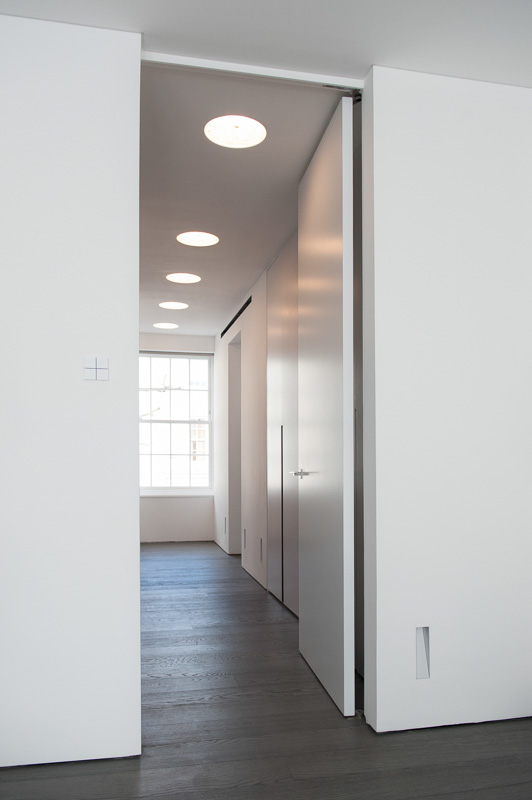
A London residential project where the quality of the internal finish was decided by how the junctions were formed — not by how they were finished.
The Challenge
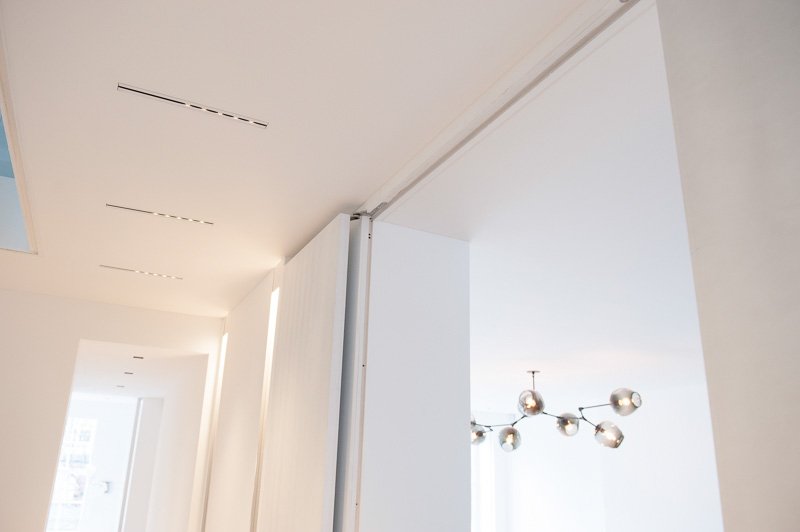
Cottesmore Gardens required clean, consistent internal detailing across skirting transitions, shadow gaps and door head junctions. At this level of finish, a site-formed detail rarely holds the line consistently from room to room. The geometry needs to be set before the finishing trades arrive — not corrected afterwards.
The Shadow Gap Solution
Seamless Abutment pre-engineered aluminium profiles were installed into the drylining build-up before skim and decoration. The shadow gap depth was fixed, the returns were straight, and the finishing trades had a defined physical edge to work to throughout. That gave the plasterer, decorator and fit-out team a consistent reference across every room and every junction.
The Result
The shadow gaps are consistent, the skirting transitions hold a true line, and the finished surfaces read as one resolved piece of work. The detail drawn on the section is the detail delivered on site. There is no visible variation between rooms, the edges hold after decoration, and the handover was cleaner — less snagging, less remedial work, less programme risk.
Why It Works
The profile is designed to sit within the drylining so the shadow gap geometry is defined before finishing begins. That is a different logic from trying to cut a clean line on site after the fact. The shadow gap depth is fixed. The return is straight. The edge does not move when the room is painted — making the finished appearance predictable from drawings through to handover.
Who Benefits
Architects and interior designers: A defined, pre-engineered shadow gap means the detail drawn on the section is the detail delivered on site. The finished interior reads closer to the intent.
Drylining contractors and fit-out teams: The profile gives the trades a physical reference to work to — a defined edge for the plasterer, a clean stop for the decorator, and a straight junction for the fit-out team. That reduces snagging and remedial work later in the programme.
Clients: The finished interior is more consistent, the detail holds over time, and there is less visible variation between rooms.